Journal
Shorter, in-the-moment notes. This is where I post:
Individuals - ideas from shapers and thinkers as public blueprints.
Weekly Connections – a summary of what I learnt each week.
Conference Notes – takeaways from events in space, finance, and technology

Weekly Connections #2
This week I moved across Aristotle’s logic, Euclid’s geometry, the night sky, rocketry, and my ongoing AION development. The pattern that emerged was simple: each discipline teaches how structure shapes behaviour. From logical forms to orbital motion to risk modelling, the same system principles appear everywhere.
Logic, Orbits, Propulsion & Building AION
Each week I’m asking myself a simple question:
What new connections did I make across disciplines that could one day create value for others?
This week’s connection:
ancient logic + Euclid + astronomy + rocketry + AI-driven space-risk systems (AION).
They look separate. But the further I go, the more they feel like the same discipline expressed in different languages:
how structure creates behaviour.
The connection
Aristotle → Euclid → the night sky
This week I spent time with:
Aristotle’s Logic II — propositions, forms, syllogisms
Euclid Book I (11–20) — acute/obtuse angles, circles, boundaries
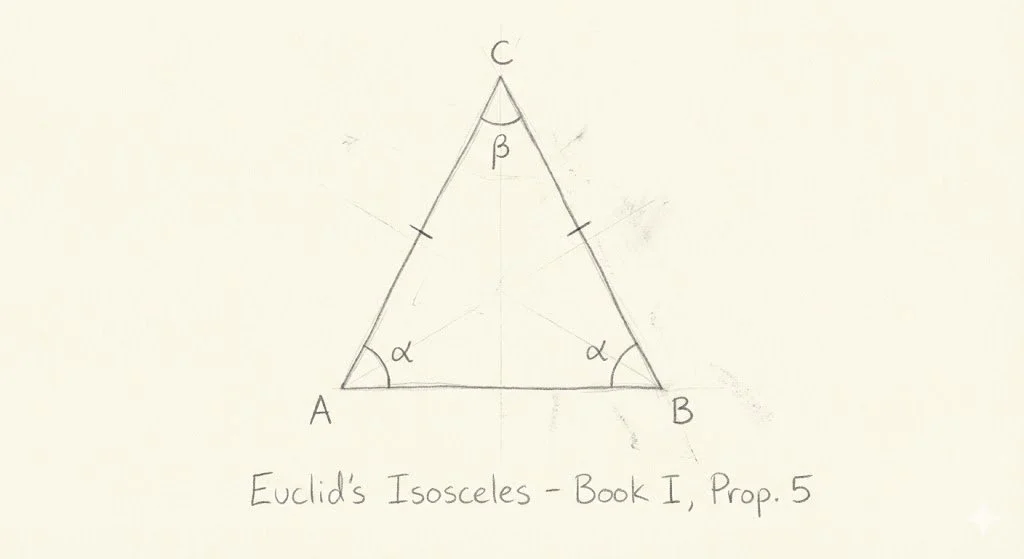
Euclid I.5 — my first full geometric proof
Astronomy exercises — Polaris, stellar motion, Earth’s rotation
Rocketry basics — thrust, mass flow, combustion, nozzle design
Risk architecture (AION Phase 4) — mission phases, near-miss modelling, regulatory bands, and incident integration
On paper, they belong to different centuries.
But the through-line is the same:
A system behaves the way it is built.
Aristotle structures arguments.
Euclid structures space.
Gravity structures motion.
Rocket engines structure energy.
AION structures the risk.
Once you see the pattern, each discipline becomes a mirror for the others.
What I studied
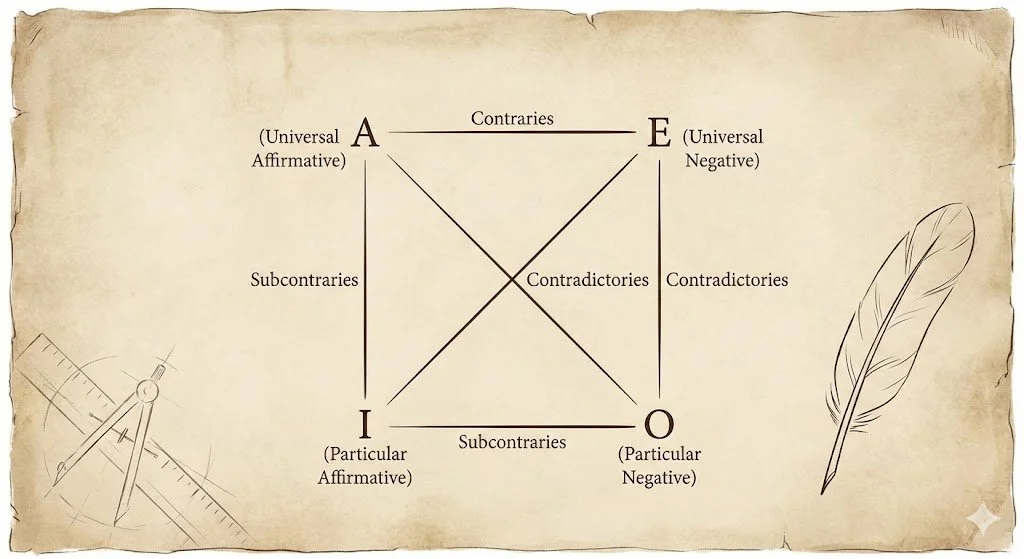
Aristotle’s Logic II—the forms beneath thought
I worked through:
Subject / predicate / copula
Quantity (universal/particular)
Quality (affirmative/negative)
The four classical forms: A / E / I / O
When I started writing my own propositions, something clicked.
A: All stars emit light.
E: No planet emits light.
I: Some stars become black holes.
O: Some stars do not collapse into black holes.
The system is simple, but it disciplines the mind.
It forces clarity at the sentence level — the smallest unit of reasoning.
Euclid Book I (11–20)
Copying and drawing the definitions again:
acute/obtuse angles
circles, diameters, boundaries
triangle types
semicircles and centres
Once drawn, the definitions become interfaces, not words.
They give geometry a grammar.
My first full Euclidean proof — I.5
The isosceles triangle proposition forced me into real geometric reasoning:
Equal sides → congruent triangles → equal base angles.
It’s more than a proof.
It’s a pattern:
Start with a given → construct → compare → conclude.
I got stuck on Euclid I.5 for longer than I'd like to admit. The logic was there, but I kept skipping steps...
Astronomy — motion, perception, reference frames
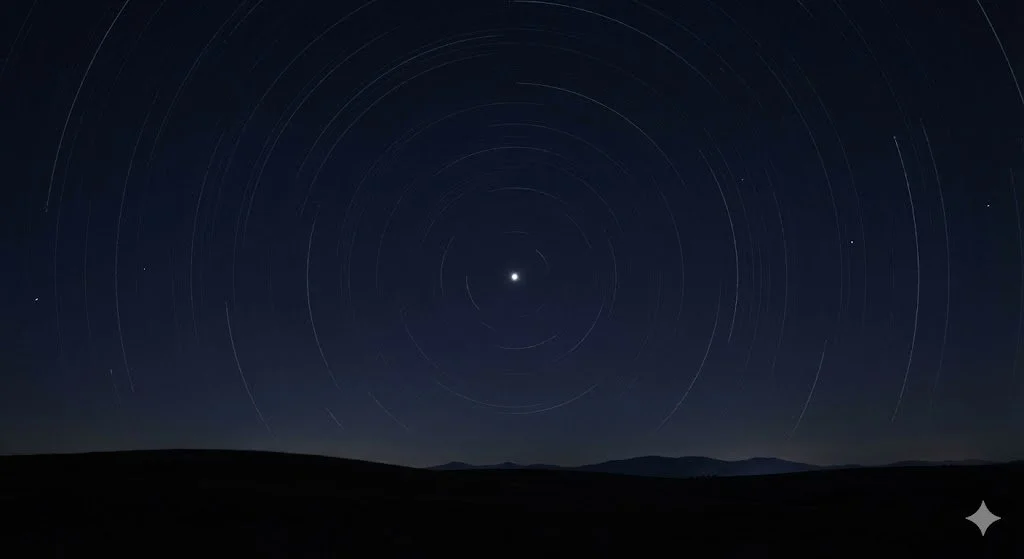
I spent two nights outside observing:
Polaris (near-perfect axis of Earth’s rotation)
The difference in motion between horizon stars and near-pole stars
Atmospheric twinkle
Brightness variations
The illusion of the sky “moving” when it’s Earth rotating
A simple insight:
The world changes depending on what you anchor to.
Polaris gives stillness.
The horizon gives velocity.
Same sky, different reference frame.
That’s also how risk behaves: it depends on where you stand in the system.
Rocketry — thrust, combustion and control
I continued my rocketry lessons and explored propulsion fundamentals:
Newton’s Third Law as the heart of thrust
Mass-flow rate × exhaust velocity
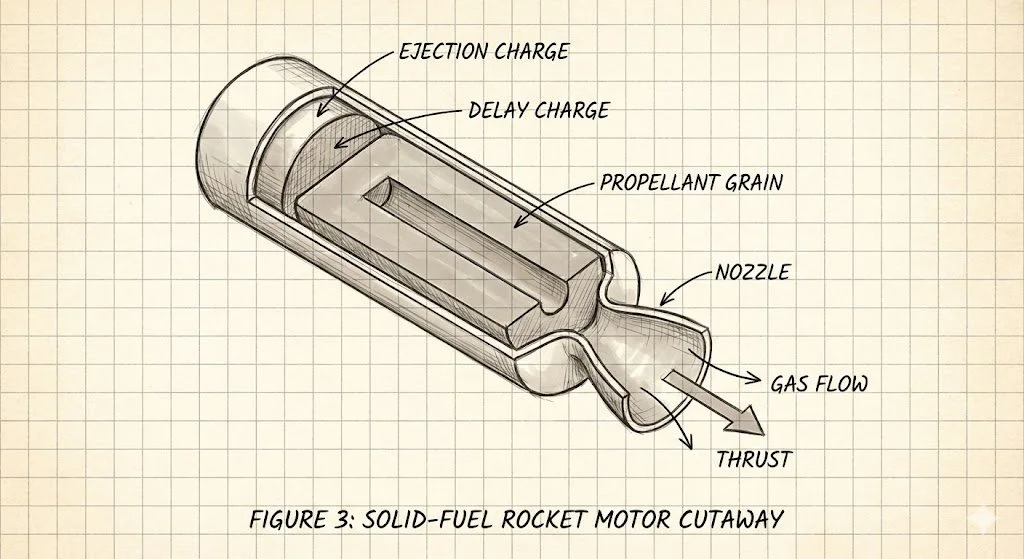
Solid engine structure (nozzle → propellant grain → delay charge → ejection)
Failure modes:
under-performance
nozzle misalignment
failed ejection
One insight stood out:
A rocket’s performance depends less on “how much fuel” and more on how efficiently energy is channelled into direction.
It's simple, but it forces you to think clearly
Flow beats force.
School of Thought — meta-learning connections
Three patterns emerged across all subjects:
Logic → Geometry
Euclid’s proofs are Aristotle’s syllogisms expressed spatially.Geometry → Astronomy
Angles and circles become real when you watch the sky move.Astronomy → Rocketry
Orbits are just curved paths created by gravity and forward velocity.
Every discipline sharpened the others.
What I built (AION Phases 4 & 5)
This was a major build week.
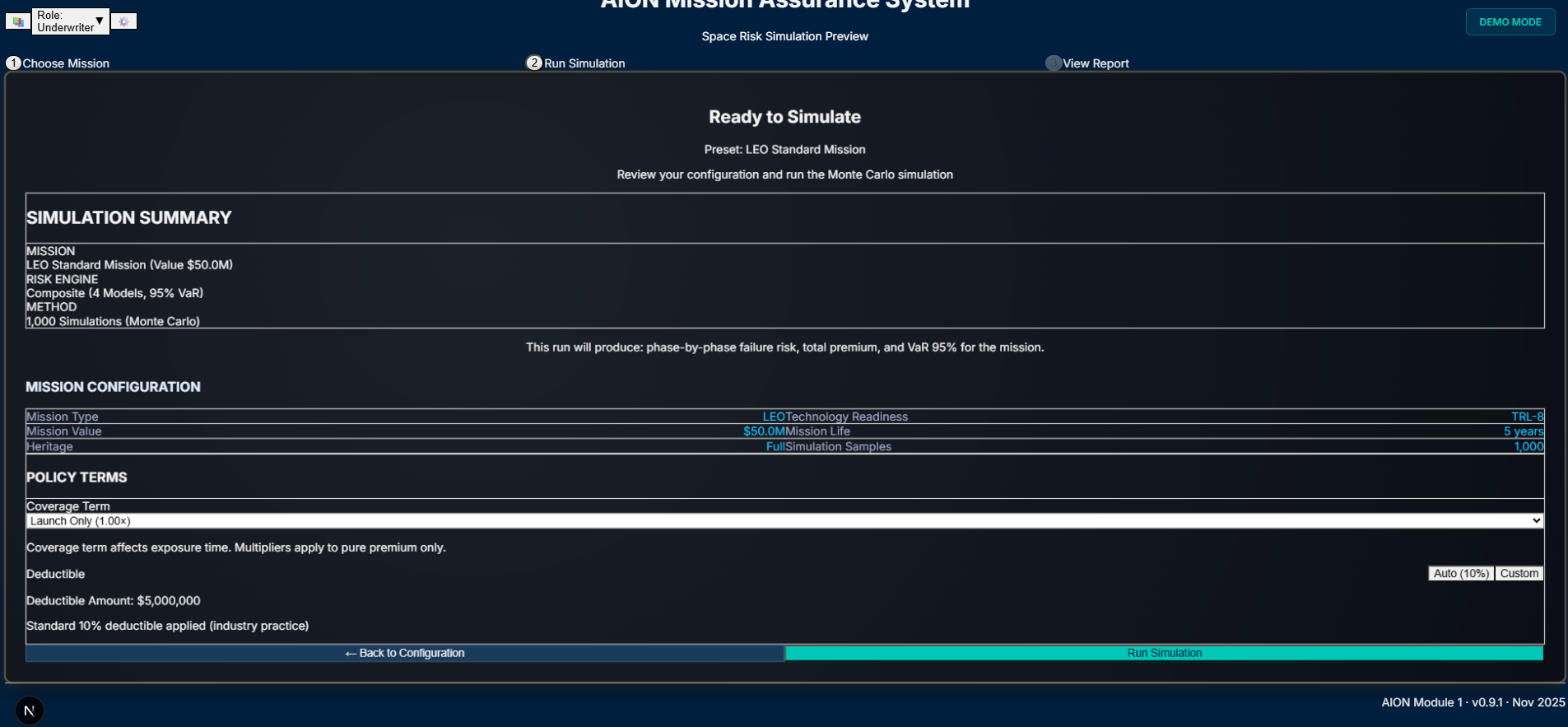
AION — Phase 4 Sprint D complete, Sprint E underway
Completed the mission timeline, phase detail panel, incident integration, and actuarial breakdowns.
Added model weights, normalised contributions, and the full 4-model ensemble.
Integrated historical incidents and proper UX patterns for underwriters.
Moved into Sprint E with backend integration, AI insight chips, regulatory tab, and export bundles.
The system is starting to feel like a mission-assurance workbench, not just a demo.
The work is technical, but the pattern matches everything above:
assumptions → structure → behaviour
inputs → transformations → outputs
clarity → confidence → better decisions
AION, like Euclid, demands order.
Small insights
Writing Euclid by hand strengthened my focus more than any modern tutorial.
The sky is a moving system, and your perception shifts with your anchor point.
Rocket engines are controlled explosions — a reminder that power without structure is chaos.
Logic isn’t abstract; it’s a container for disciplined thinking.
Risk modelling is just geometry with uncertainty.
What this reveals about the system I’m building
AION will eventually support underwriters making decisions in uncertain, high-stakes environments.
To build that system well, I need:
Aristotle’s clarity
Euclid’s structure
Astronomy’s sense of motion and reference
Rocketry’s respect for forces and constraints
This week made something obvious:
The deeper I go into ancient logic and physical systems, the better I understand the architecture of risk. Which makes me wonder: what other centuries-old frameworks am I missing?
And that’s the real point of these weekly connections —
to build the inner blueprint for the outer system.

Weekly Connections #1
Plato, Alphabets, Logic & Space Risk
Each week I’m asking myself a simple question:
What new connection did I make across disciplines that could one day create value for others?
This week’s connection: ancient philosophy + alphabets + Euclid + AI-driven space-risk systems.
The connection
I finished my first blog post on Plato’s Republic, kept going with Aristotle’s Nicomachean Ethics, completed Lesson 1 of mathematics (Aristotle’s logic + Euclid’s Book I), pushed further into Arabic writing, and read a stack of pieces on modern space politics and AI, including:
US–Middle East space partnerships
Arguments for a Yuma spaceport and a southern launch corridor
The “fallacy of being first” in Moon/Mars exploration
AI for environmental change detection and military C2
Non-Earth imaging and space-to-space surveillance
On paper these look unrelated.
But they’re all training the same muscle: the ability to live and think inside a structure.
Plato and Aristotle → how to order a life and a city.
Euclid → how to order arguments and proofs.
Arabic → how to order sounds and meaning on the page.
Space policy & AI articles → how nations and companies try to order power, risk, and infrastructure in orbit.
Those are exactly the questions I’m trying to solve with AION:
how to design systems for space insurance where logic, incentives, data, and behaviour stay in harmony instead of colliding.
Plato’s tripartite psychology (reason, spirit, appetite) is slowly turning into a design lens for AION architecture.
Euclid is teaching me the logic of structure.
Arabic is teaching me the discipline of symbols.
Space politics is teaching me how those inner structures meet real-world power.
Together, they’re forming an inner blueprint for how to build outer systems.
What I studied
Plato & Ethics
Finished Republic and published my first long-form reflection.
Read Books 7–9 of Aristotle’s Nicomachean Ethics (pleasure, friendship, character).
Mathematics – Lesson 1 (Ancient Method)
Studied Aristotle’s logical structure: terms, propositions, syllogisms.
Copied Euclid’s Definitions, Postulates, and Common Notions by hand – the old Newton/Franklin method.
Wrote my own small “First Principles” page: personal definitions, axioms, and a syllogism.
Completed a first mini-proof (“the whole is greater than the part”) and did basic logic + geometric reasoning exercises.
Arabic (Lessons 2–4)
Now comfortable writing and joining all 28 letters.
Starting to recognise word patterns and write with more flow.
Historical & Intellectual Research
Watched deep dives on Jefferson, Franklin, Washington and added notes into my School of Thought database.
What I researched (space, AI & policy)
AI infra & orchestration maps
Frameworks for how LLMs, agents, retrieval and tools fit together.
Confirmed that AION sits in the workflow/orchestration and risk infra layers, not as “just another app”.
Reinforced the decision to build a Context + Memory Engine and AI Council instead of scattering RAG scripts everywhere.
Agentic systems & token efficiency
Threads on using fewer tokens, more tool calls, and lightweight local models.
Fed directly into the idea of the AI Council as a cost-aware “Code Mode” layer, not a giant prompt that does everything.
Founder/operator reality checks
Lists of what solo builders actually end up doing: product, sales, decks, infra, support.
Helpful as a sanity check: AION can start as a solo “Jarvis-for-space” lab, but real traction will probably need partners and a focused wedge.
20s philosophy & “rock bottom on purpose”
Advice threads about upskilling, embracing discomfort, and rejecting the default 9–5 → 40–year ladder.
Lined up almost eerily with what I’m doing: deliberate reset at 27, rebuilding identity around systems thinking and the space economy.
“Don’t build from scratch” & YC-style takes
Opinions that in the current AI era, pure from-scratch full-stack coding is a bad use of time for non-engineers.
Validated my own stance: lean heavily on AI tools + existing infra, focus my energy on architecture, risk logic, and product design.
Personal Jarvis & local GPU dreams
Threads about running your own local stack and having a home “AI rig”.
This clicked as a long-term aspiration: an at-home GPU + AION stack acting as my private space-risk lab, not just cloud prompts.
What I built
AION Module 1 — Phase 4
Tested the latest UI sprint for the AION Space Risk Engine.
Continued shaping the risk simulator around a mission-phase timeline instead of generic “cards”.
Started treating Perplexity as a real research assistant, not just a flashy Google.
Research Database v1
Created a new structure for tracking ideas across space, AI, engineering, history, risk, and philosophy.
It feels like moving from “collecting links” to building a long-term mental operating system.
Brand foundations
Cleaned and relaunched my X account for public experiments.
Redesigned my Squarespace site to feel more cohesive.
Published my Plato’s Republic reflection.
Workspace upgrade
New chair, new bookshelf – Monk Mode shouldn’t happen on a collapsing chair and a pile of boxes.
Small takeaways
Systems borrowed from philosophy (Plato / Aristotle) are surprisingly powerful blueprints for software architecture and risk governance.
Alphabets and axioms look simple, but they’re really interfaces into much larger systems – get them right early.
Writing Euclid by hand did more for my clarity than any modern tutorial.
Ancient philosophers argued about how to order a city; modern builders argue about how to order AI systems and careers. The underlying problem is the same: how to live and build inside a structure that doesn’t waste your one life.
A research database plus good tools (like Perplexity) is a quiet unlock: less hunting, more thinking.
Slow, foundational learning compounds – especially in mathematics, languages, and systems design.